
External Beam Radiotherapy
Precision radiation delivered from outside the body to target cancer.
Halcyon Type E installed and undergoing commissioning · Planned start: December 2026
What is EBRT?
External beam radiotherapy (EBRT) directs high-energy x-ray beams at a tumor from outside the body. It allows doctors to treat large areas of the body or a specific area with high precision.
Treatments are typically given daily over several weeks. This allows healthy cells to repair the damage while the cancer cells, which cannot repair themselves as well, are destroyed.
Our Technology
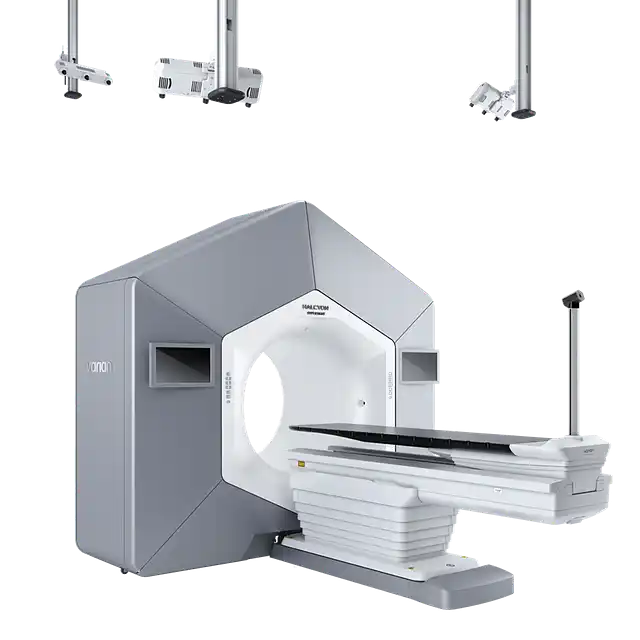
Halcyon Type E
Installed · Undergoing commissioning
We will use Identify surface-guided radiotherapy (SGRT) with our Halcyon Type E.
IMRT, VMAT and IGRT are planned for December 2026, subject to completion of commissioning and required approvals.
Planned capacity: 30 patients per day.
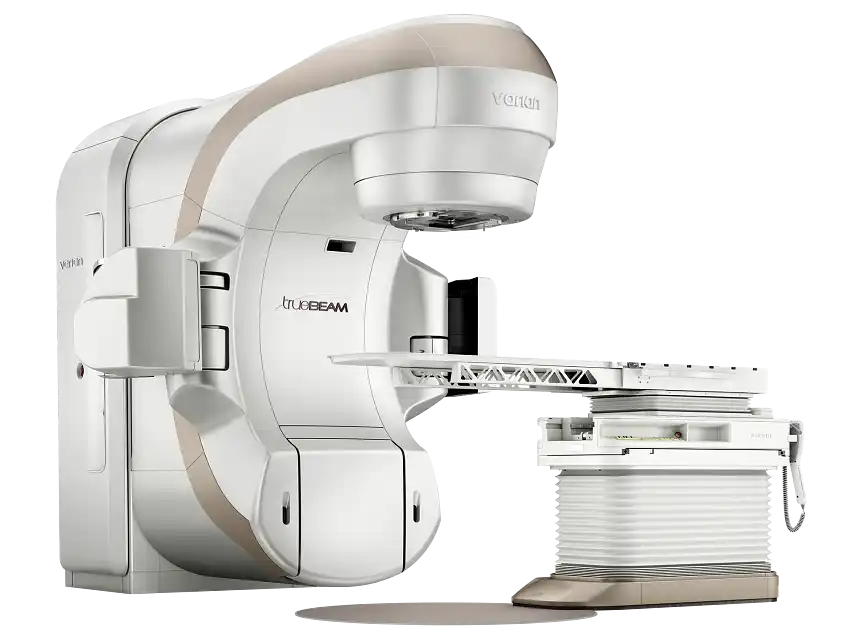
TrueBeam STx
Planned for late 2027
We plan to introduce TrueBeam STx in late 2027. We will share details of its configuration and treatments as we prepare this service.
Planned capacity: 30 patients per day.
Stereotactic treatments (SRS and SABR) are future plans. Their availability and start dates have not yet been confirmed.
Planned combined external beam capacity
Once both linacs are operational, our planned combined capacity is 60 patients per day.
Capacity estimates are based on single-shift operation.
Surface-guided radiotherapy: what to expect
Identify surface-guided radiotherapy (SGRT) uses special cameras to make a three-dimensional map of your body’s surface. This helps the radiation therapists position you and watch for movement. The camera check is contact-free and adds no X-ray dose.
We will use Identify with our Halcyon Type E, which is undergoing commissioning. Our team will explain how surface guidance will support your treatment.
Your SGRT appointment, step by step
- Planning your position. At your planning CT appointment, the team helps you find a position you can keep comfortably. Supports or a mask may be needed. Tell them if you have pain or difficulty staying in position.
- Getting ready for each treatment. You lie in the planned position. The cameras compare your body’s surface with a reference map, helping the therapists make small adjustments. The area being checked may need to be uncovered; staff will explain and help protect your dignity.
- Checking before treatment. The team also uses the treatment scans required for your plan to check inside the body. Surface guidance works alongside these checks. It cannot show the tumour or replace the scans your team needs.
- Monitoring during treatment. The system watches for changes in your surface position. If you move outside the agreed limits, the team can pause treatment, check your position and restart when appropriate. Tell them if you need to cough, move or take a break.
Breathing: follow the team’s instructions. If breath-hold is included in your plan, they will explain and practise it with you.
Treatment Techniques
IMRT & VMAT
Planned for December 2026
Intensity Modulated Radiotherapy (IMRT) and Volumetric Modulated Arc Therapy (VMAT) allow us to sculpt radiation dose around tumors, sparing healthy tissue. Treatment times depend on the individual plan.
IGRT
Planned for December 2026
Image Guided Radiotherapy (IGRT) uses scans during treatment to detect changes in tumor position, helping the team check treatment positioning.
SRS & SABR
Future plans · Start date to be confirmed
Stereotactic Radiosurgery/Ablative RT delivers high-dose radiation to small tumors (brain, lung, liver) with extreme precision, often in 1-5 sessions.
Radiotherapy Treatment Pathway
Consultation
Your journey starts with meeting your Clinical Oncologist. We review your case, perform any necessary tests, and design a personalized care plan just for you.
"Your doctor will explain the treatment benefits, potential side effects, and answer all your questions so you feel confident moving forward."